Planning a full house refurbishment London project is one of the biggest investments you can make in your home. Whether you’re modernising a Victorian terrace in Fulham, renovating a mansion flat in Westminster, or transforming a family home in Hampstead, careful planning is essential to achieve the best result.
From structural alterations and Building Regulations to kitchens, bathrooms and project management, there are many decisions to make before work begins. This guide explains each stage of the refurbishment process, helping you understand what to expect and how to plan your project with confidence.
What Is Included in a Full House Refurbishment?
A full house refurbishment usually involves more than cosmetic improvements. Depending on the condition of the property, it may include:
- Full strip-out works
- Structural alterations
- Wall removals and new layouts
- Electrical rewiring
- Plumbing upgrades
- Heating system improvements
- Kitchen installation
- Bathroom refurbishment
- New flooring
- Plastering and decorating
- New doors, skirting and architraves
- Window and door repairs or replacement
- Insulation improvements
- External repairs
- Building Control coordination
Some projects also include extensions, loft conversions, basement works, garden studios or major structural changes.
The exact scope should be agreed before work begins so that the quotation, programme and expectations are clear.

Start With a Clear Brief
Before speaking to a refurbishment contractor, it is helpful to prepare a clear brief. This does not need to be a technical document, but it should explain what you want to achieve.
Think about:
- How many bedrooms and bathrooms you need
- Whether the kitchen layout should change
- Whether you want open-plan living
- If any walls need to be removed
- Whether the property needs rewiring
- Whether the heating system needs upgrading
- What level of finish you want
- Whether you plan to live in the property during the works
- Your ideal start and completion dates
- Your approximate budget range
The clearer the brief, the easier it is for a contractor to provide accurate advice and pricing.
Why London Refurbishments Are Different
House refurbishments in London often involve more than the building work itself. Many properties are located in conservation areas, mansion blocks, period terraces or streets with restricted access. This can affect parking, deliveries, skip permits, working hours, party wall matters and building management approvals.
Planning these details early helps avoid delays once the project starts. For example, a refurbishment in Westminster, Kensington, Chelsea, Fulham or Hampstead may require additional consideration around access, neighbours, structural alterations and local authority requirements.
Check Whether You Need Planning Permission
Not every refurbishment requires planning permission. Internal decoration, replacing kitchens, updating bathrooms and general repairs usually do not require planning approval.
However, planning permission may be needed if the project includes:
- Rear extensions
- Side return extensions
- Loft conversions
- Changes to the roof
- Changes to the external appearance
- New windows or doors in certain properties
- Works to a listed building
- Works in a conservation area
In London, many properties are located in conservation areas, especially in boroughs such as Westminster, Kensington & Chelsea, Camden, Hammersmith & Fulham and Richmond. This means external changes may require additional care and approval.
If you are unsure, it is best to check before starting the project.
Building Regulations and Structural Work
Even if planning permission is not required, Building Regulations may still apply.
Building Control approval is commonly needed for:
- Structural wall removals
- Steel beam installations
- Drainage alterations
- Electrical works
- Plumbing changes
- Insulation upgrades
- Fire safety requirements
- Loft conversions
- Extensions
- New bathrooms or kitchens where services are changed
If load-bearing walls are removed, a structural engineer will usually be required to provide calculations. These calculations are then used by the contractor and submitted to Building Control where needed.
A professional refurbishment company should be able to coordinate this process with the relevant specialists.
Create a Realistic Budget
A full house refurbishment in London can vary significantly in cost depending on the size of the property, the condition of the building, the level of finish and whether structural works are involved.
The main factors that affect cost include:
- Property size
- Existing condition
- Structural alterations
- Kitchen specification
- Bathroom specification
- Electrical and plumbing requirements
- Heating system upgrades
- Flooring choices
- Joinery requirements
- Access and parking restrictions
- Scaffolding requirements
- Quality of finishes
- Design changes during the project
It is also sensible to keep a contingency allowance. Older London properties can sometimes reveal hidden issues once strip-out begins, such as damaged joists, outdated wiring, poor plumbing, damp, uneven floors or previous poor-quality workmanship.
A contingency of around 10–15% is often advisable.
Decide on the Level of Finish
One of the biggest cost differences in a refurbishment comes from the level of finish.
For example, a bathroom can be completed to a practical standard, a mid-range specification, or a high-end finish with bespoke details, premium brassware and specialist tiling.
The same applies to kitchens, flooring, lighting, doors, ironmongery and decorating.
Before the quotation is finalised, it helps to decide whether you want:
- Practical and durable finishes
- Mid-range quality finishes
- Premium finishes
- Bespoke joinery
- Luxury bathroom fittings
- High-end kitchen appliances
- Designer lighting
- Natural stone or specialist surfaces
This helps avoid confusion later and gives the contractor a better understanding of your expectations.
Typical Stages of a Full House Refurbishment
Every project is different, but a full house refurbishment usually follows a similar sequence.
Initial consultation
The first step is to discuss the property, the scope of works, timescale and budget expectations. This may be followed by a site visit so the contractor can inspect the property properly.
Site survey
During the site visit, the contractor will assess access, existing condition, services, structural requirements and any potential challenges.
Quotation
A detailed quotation should set out the scope of works clearly. This helps avoid misunderstandings and allows both parties to agree what is included.
Design and specification
For larger refurbishments, drawings, structural calculations, kitchen designs, bathroom layouts and finish schedules may be required before work begins.
Strip-out and preparation
Old kitchens, bathrooms, flooring, ceilings, wall finishes and redundant services are removed. This stage often reveals the true condition of the property.
Structural works
If walls are being removed or layouts changed, structural works are usually completed early in the programme.
First fix works
This includes electrical wiring, plumbing, heating pipework, ventilation and other hidden services before walls and ceilings are closed.
Plastering and making good
Walls and ceilings are prepared, repaired and plastered ready for decoration and second fix works.
Second fix works
This includes sockets, switches, lighting, bathroom fittings, doors, skirting, architraves, kitchen installation and visible finishes.
Flooring and decorating
Floor finishes, painting, final details and snagging are completed towards the end of the project.
Final inspection and handover
The project is reviewed, final items are completed, and relevant certificates or documentation are provided where applicable.
How Long Does a Full House Refurbishment Take?
The timescale depends on the property size and complexity.
As a general guide:
- Small flat refurbishment: 6–10 weeks
- Larger flat refurbishment: 8–14 weeks
- Full house refurbishment: 12–24 weeks
- House refurbishment with extension: 20–36 weeks or more
Projects involving planning permission, structural alterations, bespoke joinery, specialist finishes or complex access may take longer.
The most important thing is to have a realistic programme from the beginning. Rushing a refurbishment often leads to mistakes, stress and additional cost.
Should You Live in the Property During the Works?
For a full house refurbishment, it is usually better to move out during the main works if possible.
Living in the property can be difficult because there may be:
- Dust
- Noise
- Limited access to bathrooms or kitchens
- Temporary loss of services
- Restricted rooms
- Health and safety concerns
- Delays caused by working around occupied areas
For smaller phased projects, it may be possible to remain in the property, but for a complete refurbishment, temporary accommodation is usually the smoother option.
Choosing the Right Refurbishment Contractor
Choosing the right contractor is one of the most important decisions you will make.
A good refurbishment company should provide:
- Clear communication
- A detailed written quotation
- Relevant experience
- Proper insurance
- Health and safety procedures
- Qualified electrical and gas contractors where required
- Realistic timescales
- Transparent payment stages
- A professional approach to site management
- References or examples of previous work
It is rarely advisable to choose a contractor based only on the lowest price. A very low quotation may exclude important items or lead to additional costs later.
For larger refurbishment projects, experience, organisation and reliability are just as important as the initial price.
Common Mistakes to Avoid
Many refurbishment problems can be avoided with better planning.
Common mistakes include:
- Starting without a clear scope of works
- Choosing finishes too late
- Making major design changes during construction
- Underestimating the budget
- Not allowing a contingency
- Ignoring Building Control requirements
- Choosing the cheapest quotation without checking what is included
- Not confirming who is responsible for supplying materials
- Not agreeing payment stages in advance
- Expecting unrealistic completion times
A professional contractor should help guide you through these decisions before work begins.
Internal Layout and Structural Changes
Many London homeowners refurbish because the existing layout no longer suits modern living.
Common layout changes include:
- Creating open-plan kitchen and dining areas
- Removing walls between living spaces
- Adding downstairs WCs
- Enlarging bathrooms
- Creating utility rooms
- Improving storage
- Reconfiguring bedrooms
- Improving natural light
- Connecting internal spaces to the garden
Where walls are load-bearing, structural calculations and Building Control approval may be required. This is especially common in older terraced houses, mansion flats and period properties
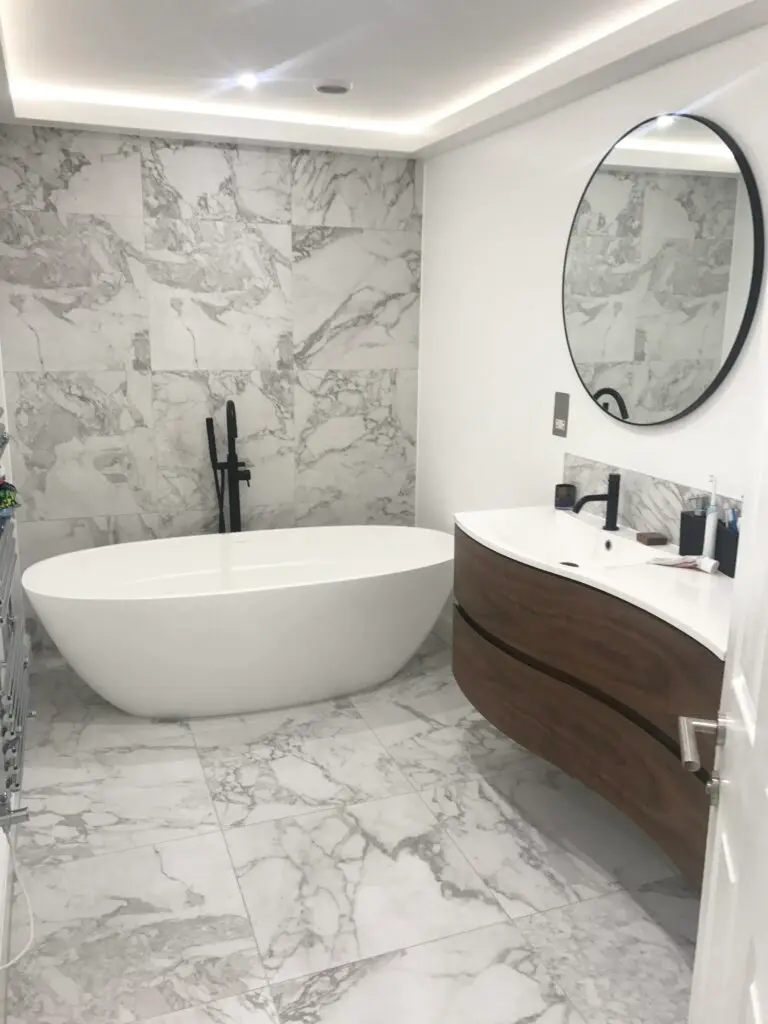
Kitchens and Bathrooms
Kitchens and bathrooms are often the most detailed parts of a refurbishment.
They require coordination between several trades, including plumbing, electrical, tiling, plastering, flooring, decoration and installation.
Before work starts, it is helpful to confirm:
- Kitchen layout
- Appliance positions
- Worktop choice
- Lighting design
- Socket locations
- Extractor requirements
- Bathroom layout
- Sanitaryware choices
- Tile selection
- Shower type
- Underfloor heating requirements
- Storage requirements
Late decisions can delay the programme, especially if items have long delivery times.
Electrical, Plumbing and Heating Upgrades
Older London properties often need service upgrades during refurbishment.
This may include:
- Full or partial rewiring
- New consumer unit
- Additional sockets
- New lighting circuits
- Smoke alarms
- Data cabling
- Plumbing replacement
- New radiators
- Boiler upgrades
- Underfloor heating
- Improved water pressure
- Ventilation upgrades
These works are easier and more cost-effective to complete during a full refurbishment, while walls, floors and ceilings are already open.
Why Project Management Matters
A full refurbishment involves many trades and stages. Without proper coordination, delays and mistakes can quickly happen.
Good project management helps ensure:
- Materials arrive on time
- Trades work in the correct sequence
- Drawings and details are followed
- Site safety is maintained
- Problems are dealt with quickly
- Communication remains clear
- The programme stays realistic
- The finish is consistent
For homeowners, this reduces stress and makes the refurbishment process much easier to manage.
Preparing for a Site Visit
Before arranging a site visit with a contractor, it is useful to prepare:
- Existing floor plans, if available
- Proposed drawings, if available
- Planning documents, if applicable
- Structural drawings, if applicable
- Photos or videos of the property
- A list of works required
- Your preferred start date
- Your desired completion date
- Any access restrictions
- Any building management requirements
- Your finish expectations
This allows the contractor to give more useful advice during the visit.
Why Choose Property Refurbishment London?
Property Refurbishment London works with homeowners across London on residential refurbishment, renovation and extension projects.
Our services include full house refurbishments, flat refurbishments, home extensions, structural alterations, kitchen and bathroom installations, decorating, flooring and complete project coordination.
We understand that a refurbishment is a significant investment. Our approach is based on clear communication, detailed quotations, organised project management and high-quality workmanship.
We work with qualified specialists where required, including electrical and gas contractors, and can coordinate with architects, structural engineers and Building Control depending on the project requirements.
Whether you are refurbishing a period property, modernising a family home, renovating a flat or planning a larger refurbishment with structural changes, we can help you understand the process and plan the works properly.
Planning a Refurbishment Project?
If you are planning a full house refurbishment in London, the best starting point is a clear conversation about your property, your goals and the scope of works.
Every property is different, and a site visit is often the most effective way to understand what is required.
Contact Property Refurbishment London to discuss your project and arrange a consultation.
Frequently Asked Questions
The cost depends on the size, condition and specification of the property. Structural work, kitchens, bathrooms, heating, electrical upgrades and finishes can all affect the final price. A site visit and clear scope of works are usually needed before an accurate quotation can be provided.
How long does a house refurbishment take?
A full house refurbishment can take anywhere from 12 to 24 weeks or more, depending on the size of the property and complexity of the works. Projects involving extensions, structural changes or bespoke finishes may take longer.
Do I need planning permission for a house refurbishment?
Internal refurbishment works often do not require planning permission. However, planning may be required for extensions, loft conversions, external changes, listed buildings or properties in conservation areas.
Building Control approval may be required for structural alterations, drainage changes, electrical works, insulation upgrades, extensions, loft conversions and other regulated works.
Can I live in my house during refurbishment?
For a full refurbishment, it is usually better to move out during the main works. Dust, noise, restricted access and temporary service interruptions can make living in the property difficult.
What should I prepare before contacting a contractor?
Prepare any plans, photos, videos, planning documents, structural information and a written list of the works you want completed. It also helps to know your preferred timescale and budget range.
What is the difference between renovation and refurbishment?
The terms are often used together. Refurbishment usually refers to improving, repairing and modernising a property, while renovation can include more extensive restoration or renewal works.
How do I choose the right refurbishment company?
Look for experience, proper insurance, clear communication, detailed quotations, relevant previous projects and a professional approach to project management.